

India's spy satellite part of a broader strategy

On April 20th, 2009 India launched a spy satellite-RISAT- aimed at boosting the surveillance capabilities of the army, especially at the borders. The purchase of the Israeli-made satellite was put on a fast-track after the November 26 Mumbai attacks, which claimed more than 180 lives and left the security establishment completely bewildered. The incident saw the long-impending replacement of India's Home Minister and the subsequent re-organisation of India's security apparatus. The procurement of this Israeli satellite was a shot in the arm for India's intelligence services which, in recent years, has come to rely heavily on TECHINT methods.
The launch of RISAT will provide a much-needed boost to the security of India. The country has witnessed hundreds of terrorism-related incidents in the past few years. Terrorist organisations like the ULFA, NSCN, the Naxalite movement have spawned and are actively working in several parts of India. The all-weather surveillance capabilities of RISAT would help in getting crucial information about such groups too, apart from keeping a watch on the India-Pakistan border. The launch has placed India in a group of select nations -US, Canada, Germany and Japan - with spy satellite capabilities.
Reports show that despite the Indian elections looming large, the pace of activity at the Home Ministry and the Defense Ministry have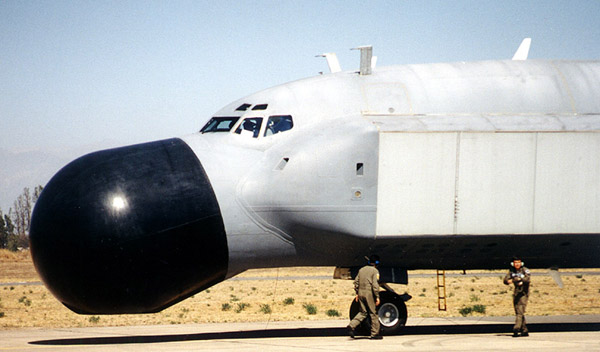 not slowed down. India also plans to buy the Phalcone Airborne Warning and Control System (AWACS) from the Israelis (image alongside), with whom defense ties have been becoming stronger since the BJP-led NDA government came to power in 2001. In just the last year, after the Nov 26 attacks, India has signed a deal to buy short-range surface to air missiles and aerostat radars for its Navy. India is also in talks with United States , Israel and Russia for raising an effective Anti-Ballistic Missile shield, the threat of which from Pakistan is a looming possibility. This apart from the almost $10 billion it wants to spend procuring 126 combat aircrafts for its ageing Air Force fleet.
Analysts point out that the focus of India's defense establishment has shifted rapidly from China to Pakistan, after the Nov 26 Mumbai attacks. Long pending defense purchases like the ones above are being expedited, and coordination between India's multitude of security agencies is being made a top priority. The policy focus on Pakistan has become even more pronounced since Taliban assumed control of the Swat Valley in Pakistan, and subsequent rise in violence across Pakistani mainland. Indian administrators realise that the situation may well spiral out of control leading to the fall of Pakistan as early as the end of 2009, if nothing is done to curb that. This policy change comes well ahead of the elections - dubbed by BBC as "the greatest exercise of the democratic will anywhere and at any time in human history" - and in good time. With four more phases of electioneering and voting to go, it remains to be decided whether the people of India will give this administration a chance to extend this policy for the next four years.
More readings:
India's new arms have Pakistan in focus
India launches Israeli-made satellite for eyes in the sky


0 comments:
Post a Comment